State Laws
Surrogacy in New York: The CPSA and the Surrogates' Bill of Rights
September 17, 2026 · 7 min read · On Fertility Ground Surrogacy
Last reviewed September 2026. General education, not legal advice — confirm with a licensed New York reproductive attorney.
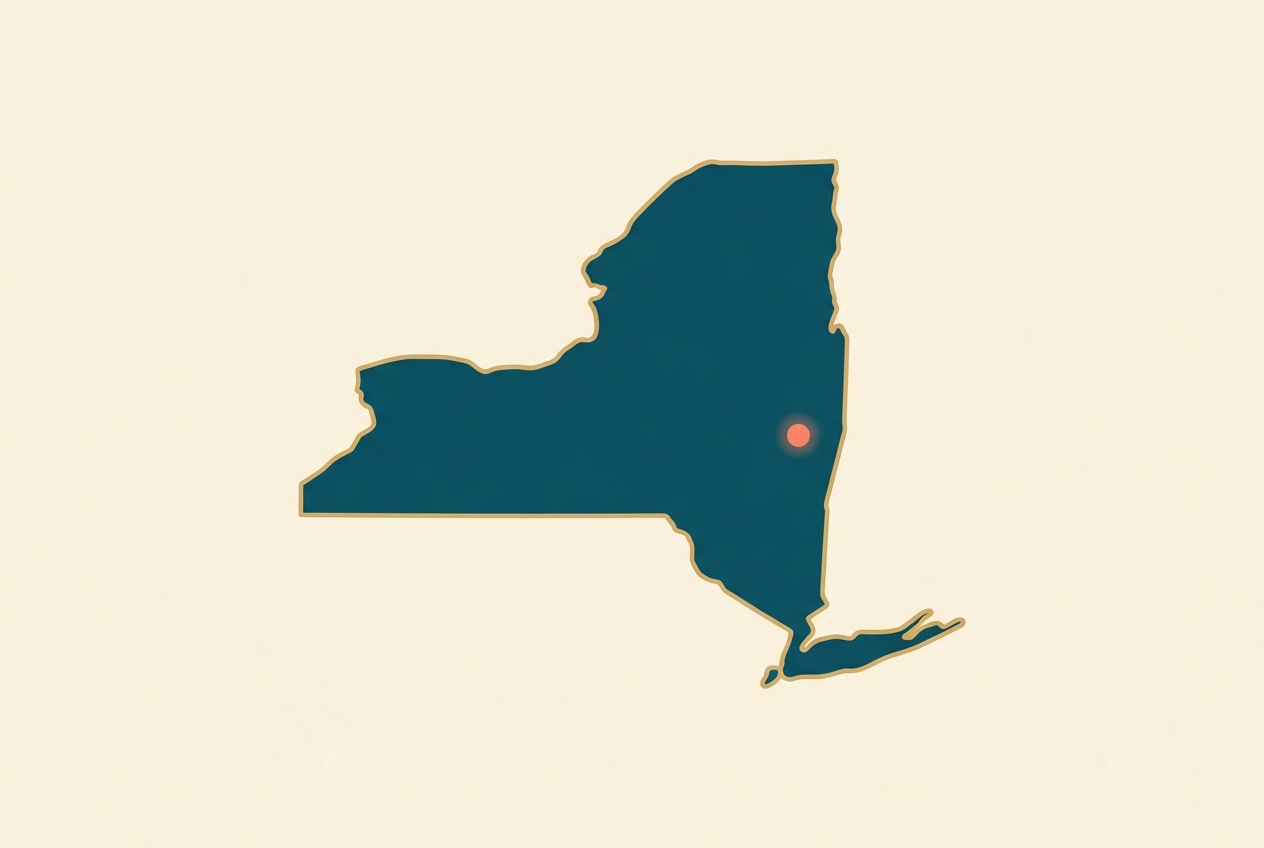
New York banned compensated surrogacy for thirty years. Then the Child-Parent Security Act (CPSA) took effect in 2021 and the state swung to the other end of the spectrum — legal, and with surrogate protections written directly into statute rather than left to contract.
How the CPSA Works
- Compensated gestational surrogacy is legal and agreements are enforceable when they comply with Family Court Act Article 5-C.
- Surrogacy programs must be licensed by the New York State Department of Health. This is unusual — most states don't license agencies at all.
- Residency: at least one intended parent must be a U.S. citizen or have been a New York resident for at least six months, and the surrogate must either reside in New York or give birth there.
- A Gestational Surrogates' Bill of Rights must be provided to the surrogate, and it applies to every agreement — including independent journeys arranged without a matching program.
Source: New York State Department of Health, surrogacy guidance; Family Court Act Article 5-C.
The Surrogates' Bill of Rights
This is the part worth reading even if you'll never do a journey in New York, because it's a useful benchmark for what a well-protected surrogate should have anywhere. It guarantees the surrogate rights covering:
- Her health and medical decisions during the pregnancy.
- Independent legal counsel of her own choosing, paid for by the intended parents.
- Health insurance and life insurance arrangements.
- The right to terminate the agreement under defined circumstances.
If you're considering a journey in a state with no equivalent statute, use this list as your checklist. Every one of these should be in your contract regardless of where you live — and at On Fertility Ground they are, plus you set your own base compensation.
What Trips People Up
The licensing requirement. If you're matching through a program for a New York journey, confirm that it holds a current New York Department of Health license. An unlicensed program operating a New York match is a problem you don't want to inherit.
The residency and birth-location rules. These are specific, and they're easy to fall foul of if a surrogate moves mid-journey or plans to deliver across a state line. Flag any relocation to your attorney immediately.
New York vs. California
Both are strong. New York's distinguishing feature is statutory surrogate protection and agency licensing; California's is a longer track record, a very well-worn pre-birth order process, and no residency or citizenship condition. Families and surrogates do well in either — the differences show up in logistics more than in outcomes. See the full state-by-state map and our California explainer.
If you're in New York and want a candid read on your options, email info@onfertilityground.com or take the 2-minute quiz.
Ready to Learn More?
Whether you're considering surrogacy as a surrogate or an intended parent, we're here to answer every question personally.
Email us at info@onfertilityground.com — We answer every inquiry personally.
General education, not legal advice. Reflects the Child-Parent Security Act and New York State Department of Health guidance as of September 2026. Any New York journey requires a licensed New York reproductive attorney and, where a program is involved, a DOH-licensed surrogacy program.