Surrogacy News
Florida's Triplet Surrogacy Case: The Latest on Kyla Simpson — and What Every Surrogate Should Learn From It
September 14, 2026 · 8 min read · On Fertility Ground Surrogacy
Updated September 15, 2026

The story of Kyla Simpson has become one of the most closely watched surrogacy cases in the country — a cautionary tale about international arrangements, informed consent, and what happens when a journey does not go to plan. Here is the backstory and the latest on her fight.
The Backstory
Kyla Simpson, a Black woman from St. Augustine, Florida, entered surrogacy hoping to help someone build a family while providing for her own. Working with a California-based agency, she was matched with a single intended father living in China. She agreed to a transfer of two embryos; one embryo split, resulting in a high-risk triplet pregnancy. Simpson has said she was never adequately warned about the risks of transferring multiple embryos.
A High-Risk Birth and a Devastating Loss
About five and a half months in, doctors found severe growth restriction in one of the fetuses that threatened all three. Simpson was hospitalized and delivered the triplet boys by cesarean section roughly a month early, on November 4, 2024, at UF Health Jacksonville. The babies spent about two months in the NICU.
Simpson and her husband, Lincoln, brought them home in January 2025 and raised them as their own — feeding them, taking them to appointments, and bonding with them. In August 2025, the smallest of the triplets died from complications of RSV. Simpson arranged and attended his funeral.
The Intended Father Never Came
The intended father did not appear for the birth and, according to Simpson, repeatedly delayed, citing visa problems. At one point, two strangers arrived at her home saying they had been sent to collect the babies; she refused and contacted authorities. Communication eventually broke down. Simpson has said she came to fear the arrangement was tied to something more troubling and contacted the FBI, though no investigation has been publicly confirmed.
The father has denied any wrongdoing. He maintains he simply wanted his sons, that visa issues blocked his travel, and that an intermediary misled him — including by sending him a parentage document that turned out to be fake.
The Latest Updates
In May 2026, Simpson filed to terminate the intended father's parental rights so she could adopt the boys. In June 2026, a St. Johns County judge ruled in the father's favor, granting him legal and physical custody, and the two surviving boys were removed from Simpson's home. They have since been kept in California while the case continues, with the father reportedly video-calling from China.
Simpson's attorney, Ellen Kaplan, appealed to Florida's Fifth District Court of Appeal and filed an emergency motion to prevent the children from being taken out of the country — a critical point, because China is not a party to the Hague Convention on international child abduction, which would otherwise help bring them home. Florida Attorney General James Uthmeier also intervened, arguing the case raises broader questions about surrogacy and parentage across state and national lines. The dispute is expected to continue for months.
The Bigger Picture — and the Lessons
- State law can be sidestepped. Florida enacted a July 1, 2026 ban on surrogacy contracts involving citizens or residents of designated "foreign countries of concern." But such rules are easily bypassed by matching through agencies in states with looser laws — which is part of how this arrangement came together.
- Multiple-embryo transfers carry real risk. Transferring more than one embryo raises the odds of a high-risk multiple pregnancy. A surrogate deserves clear, honest informed consent about those risks — not a rushed decision. Read why single embryo transfer has become the standard of care.
- International arrangements are a legal minefield. Cross-border surrogacy can leave children in limbo when travel, visas, or intentions change. Parentage, birth plans, and contingencies must be airtight and in writing — here's how well-run international journeys are structured.
- Black maternal health deserves special attention. Black women already face some of the worst maternal-health outcomes in the country. A surrogate's physical safety and voice must be centered at every step — it's the core of what BIPOC surrogates deserve.
This is exactly why On Fertility Ground was built the way it is: honest informed consent, an independent attorney for every surrogate, careful vetting of every intended parent, and a founder who reads every application personally. If you are considering surrogacy and want a team that puts your protection first, reach out.
Sources
- First Coast News — Surrogate fights for parental rights
- theGrio (via Yahoo News) — What the Kyla Simpson case reveals
- Straight Arrow News — Coverage of ongoing surrogacy custody disputes
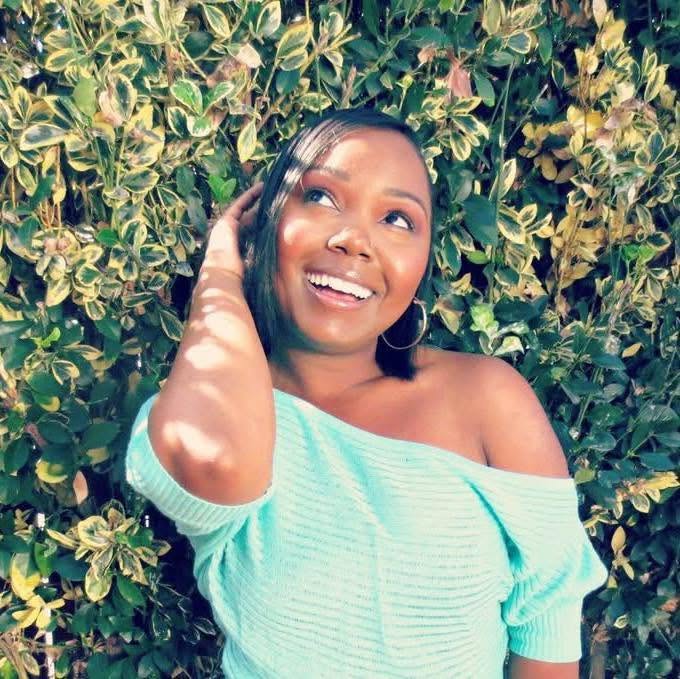
From Our Founder
Bree — Founder & CEO, On Fertility Ground
Kyla's story hits close to home for me — a Black woman who said yes to helping a family, who did everything asked of her and more, and who was failed at nearly every checkpoint where an agency should have protected her. Two embryos transferred without real informed consent. An intended parent nobody adequately vetted. No independent advocate when things fell apart.
I read every single application that comes through OFG myself, and I personally vet every intended parent. Not because I don't trust my team — because after stories like this one, I believe a surrogate deserves to know exactly whose hands her journey is in. Hers should never be the only name anyone verified.
— Bree | info@onfertilityground.com · Meet Bree →
Ready to Learn More?
Whether you're considering surrogacy as a surrogate or an intended parent, we're here to answer every question personally.
Email us at info@onfertilityground.com — We answer every inquiry personally.
Last reviewed September 15, 2026 by Bree, Founder & CEO of On Fertility Ground Surrogacy.